College is often marketed as the golden ticket to success, but let’s be real—it’s a business first and an educational institution second. From skyrocketing tuition fees to student loans that follow you for life, the system is designed to make money. But if you understand how it works, you can flip the script and come out ahead.
In this blog, we’ll break down why college operates like a business and how you can navigate the system to get the most value without drowning in debt.
The Business of College: How Universities Profitur Heading Text Here
1. Tuition & Fees: The Price Keeps Rising

College tuition has skyrocketed over the last few decades, often outpacing inflation and wage growth. While universities justify these increases by citing the rising costs of faculty salaries, technology, and campus improvements, the reality is that much of the increase comes from administrative expenses and the push to offer “luxury” campus experiences. Many students don’t realize that beyond tuition, they’re also paying for various hidden fees—such as lab fees, athletic fees, and student life fees—that significantly drive up the total cost of attendance.
College tuition has increased faster than inflation for decades.
Universities charge premium prices for degrees that don’t always guarantee high-paying jobs.
Hidden fees (lab fees, athletic fees, “student life” fees) add up quickly.
2. Student Loans: A Billion-Dollar Industry

The student loan industry is a massive financial machine that colleges benefit from without assuming any risk. With over $1.7 trillion in student debt, universities encourage borrowing because they know lenders will cover tuition, no matter how high it climbs. The sad reality is that many students graduate with tens or even hundreds of thousands of dollars in debt, sometimes without the earning potential to repay it easily. Since colleges don’t take on the liability when students default on their loans, they have little incentive to keep costs in check.
Student debt in the U.S. is over $1.7 trillion, and colleges know students will take out loans.
Federal and private lenders profit from interest rates, keeping graduates in debt for decades.
Universities have no financial risk when students default on loans—so they keep raising tuition.
3. Full-Pay Students Help Fund Financial Aid

Many people don’t realize that financial aid is a balancing act for colleges. Universities rely on full-price students—who are often from wealthier families or international backgrounds—to offset the cost of financial aid packages given to other students. This is why schools strategically allocate merit-based and need-based aid to attract a diverse range of students while still maintaining profitability. Private colleges, in particular, use merit scholarships as a marketing tool to entice students who may not qualify for need-based aid but who wouldn’t otherwise consider their institution. Meanwhile, elite universities with large endowments focus more on need-based aid, ensuring that students from lower-income backgrounds can attend without loans.
Colleges rely on full-price students to balance their budgets.
These students subsidize financial aid for those receiving merit-based or need-based scholarships.
Private schools use large merit scholarships to attract students, while elite schools focus on need-based aid.
4. Luxury Dorms & Amenities: Selling the ‘College Experience’

Walk onto a college campus today, and you might mistake it for a resort. From gourmet dining halls to high-end dormitories, colleges are investing heavily in amenities that have little to do with education. These additions allow schools to justify higher tuition rates by creating an illusion of exclusivity and prestige. The irony? Many students end up paying for these luxuries through increased loans, even if they never use them. Instead of investing in academics, universities market “the experience”—which often means more debt for students.
Colleges invest in high-end dorms, gyms, and dining halls instead of lowering tuition.
These luxuries justify higher tuition rates without improving education quality.
Students often pay for amenities they never use—increasing their debt burden.
5. Overpaid Administrators, Underpaid Professors

While universities claim that rising tuition costs go toward better education, a significant portion of the money actually funds administrative salaries. Many university presidents earn seven-figure salaries, while adjunct professors—who often teach the bulk of undergraduate courses—struggle to make ends meet. Meanwhile, the number of non-teaching staff continues to grow, increasing costs without directly benefiting students. This administrative bloat is a major reason tuition prices remain high, even as education quality stays the same or declines.
University presidents make millions, while adjunct professors are underpaid.
Administrative staff has ballooned, increasing costs for students.
Universities should invest in professors and research, not just executives.
How to Beat the System & Get the Most for Your Money
1. Choose the Right School & Degree
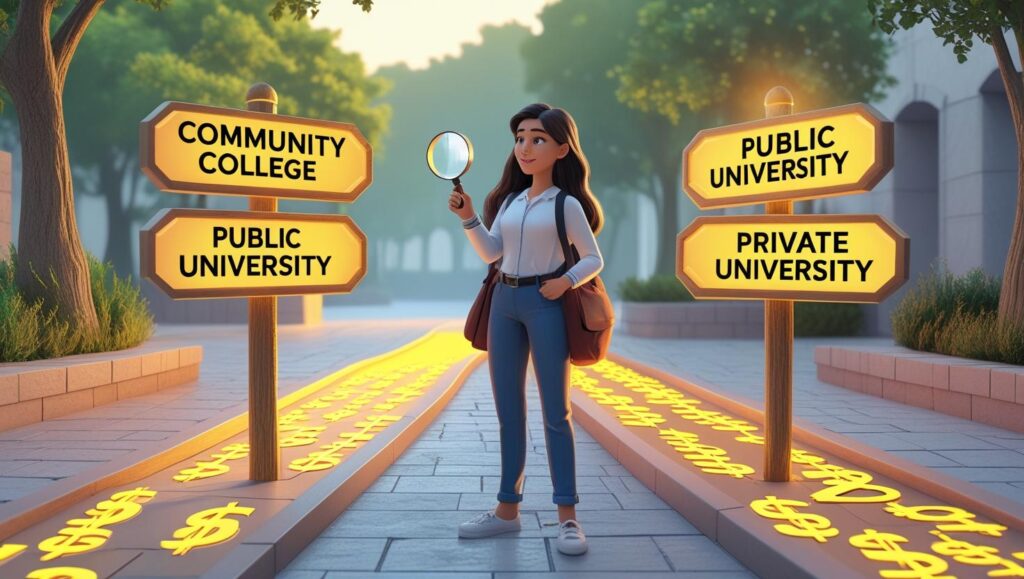
Not all colleges are created equal, and price doesn’t always equal quality. Many students can save thousands of dollars by making smart choices about where and how they earn their degree.
Community College First: Many students waste money taking general education courses at expensive universities when they could complete the same classes for a fraction of the cost at a community college. Starting at a two-year school and transferring later can save $20,000 or more over the course of a degree.
Public vs. Private: Private colleges often charge two to three times more than state universities, but they don’t always provide a better education. In many cases, in-state public universities offer just as strong academic programs with a significantly lower price tag.
High ROI Majors: Certain fields—like STEM (Science, Technology, Engineering, Math), healthcare, and business—tend to lead to higher salaries and better job security. If you’re taking on student debt, make sure your degree provides a strong return on investment (ROI) so you can pay it off quickly.
2. Minimize Student Debt
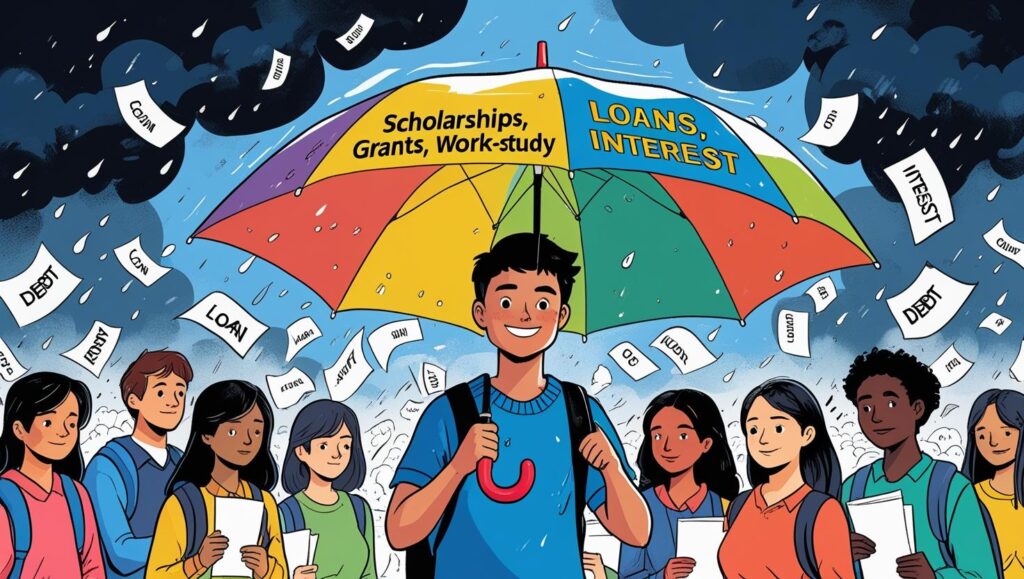
The best way to beat the system is to avoid debt in the first place. Borrowing tens of thousands of dollars for a degree that doesn’t guarantee financial stability can be a major setback. Use these strategies to minimize your reliance on student loans.
Apply for Scholarships & Grants: There is billions of dollars in free money available through scholarships and grants, yet most students don’t apply for enough of them. Even small scholarships add up, so apply early and apply often.
Work-Study & Side Hustles: Instead of relying solely on loans, working part-time on campus or taking on freelance gigs can help cover expenses. Many students are earning money online through tutoring, freelance writing, or remote jobs while in school.
Live Off-Campus: Room and board at a university can cost an additional $10,000-$15,000 per year. If possible, consider living at home, renting with roommates, or choosing more affordable housing options to save on costs.
3. Test Out of Classes & Take Online Courses

Most students don’t realize that they can earn college credits without ever stepping foot in a classroom—saving both time and money.
Dual Enrollment: Obtaining an Associates degree (AA) while in high school or just taking as many general ed courses as you can at a local community college will provide you a step ahead. Be sure all of your courses transfer to a four year university. This alone will save you two years of tuition and keep the doors open to continuing your education by achieving a masters of doctorate. |
CLEP & AP Exams: College-Level Examination Program (CLEP) tests and Advanced Placement (AP) exams allow students to earn college credit by proving they already know the material. This can shave off a semester or more of tuition costs.
Community College Transfers: Instead of paying full price for the first two years at a university, students can take free courses at a local community college and transfer them later to their desired four-year institution.
Online & Alternative Credentials: More employers are recognizing certifications and specialized training from platforms like Google Career Certificates, Coursera, and LinkedIn Learning. These programs often cost a fraction of a college course and can boost employability without the high price tag.
4. Network & Build Experience Over Just Getting a Degree

A degree alone doesn’t guarantee a job—experience and connections do. Building a strong professional network and gaining real-world experience can help students land jobs faster and with better salaries.
Internships and Part-Time Jobs Matter More Than a 4.0 GPA: Employers value experience over perfect grades. Internships, apprenticeships, and part-time jobs in a relevant field provide real-world skills and make a graduate more hireable.
Professors, Mentors, and Alumni Connections Can Open Doors: Many students don’t take advantage of the built-in network at their college. Connecting with professors, alumni, and industry professionals can lead to job referrals and mentorship opportunities.
Build a Portfolio, Personal Brand, or Side Business: In today’s world, having a strong LinkedIn profile, a personal website, or even a side hustle can set you apart. Employers love to see initiative and real-world skills, not just a diploma.
Until next time, friends, happy scholarship hunting!
Beth Romer
Let’s Connect on your Fave Social:
IG: @iambethromer
Facebook: @iambethromer
FB Page: @thescholarshipawardcoach
FB Group: Scholarship Secrets Confidential
YouTube: Breakfast With Bethanny TBD